
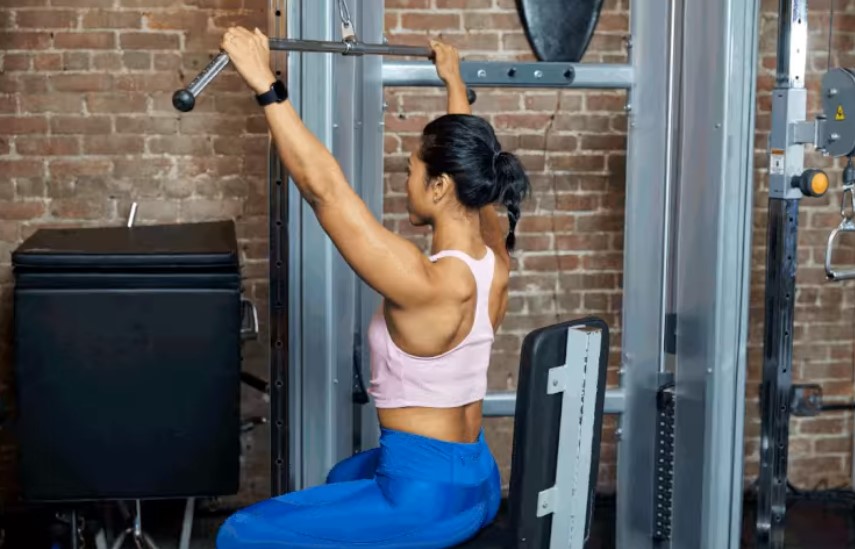
Targets: Shoulders, back
Equipment Needed: Cable pulley machine, light weights, or resistance band
Level: Beginner
The pulldown exercise works the back muscles and is performed at a workstation with adjustable resistance, usually plates.
You pull a hanging bar toward you while seated until it reaches your chin, then you controllably release it and raise it again for one repeat.This exercise can be done as part of an upper-body strength workout.How to Do a Lat Pulldown: Proper Form, Variations, and Common Mistakes
How to Do a Lat Pulldown
With your feet flat on the ground, take a comfortable seat on the pull-down seat. Verify the bar’s height.You may need to adjust the bar height by shortening or lengthening the chain or cable that supports the bar or your seat height. Get a gym trainer to help with this if necessary. How to Do a Lat Pulldown: Proper Form, Variations, and Common Mistakes
- Grasp the bar with a wide grip with an overhand, knuckles-up grip. Other positions and grips are possible but start with this standard position.
- Pull the bar down until it’s approximately level with the chin. Exhale on the downward motion. While shifting slightly backward is OK, aim to keep your upper torso stationary. Keep your feet flat on the floor and engage your abs as you pull. The bottom of the motion should be where your elbows can’t move downward anymore without moving backward. Be sure to stop at that point and do not go lower.
- Squeeze the shoulder blades together while maintaining square shoulders.
- From the bottom position, with the bar close to your chin, slowly return the bar to the starting position while controlling its gradual ascent. Don’t let it crash into the weight plates.
- Continue until you complete eight to 12 repetitions in a set. Rest, then continue to complete your program of sets.
Benefits of Lat Pulldowns
It’s essential to target your back muscles to help with proper posture and to ease pulling movements, like opening a door, starting a lawnmower, swimming, or even performing a pull-up. Having strong lats may even help relieve some kinds of back pain.How to Do a Lat Pulldown: Proper Form, Variations, and Common Mistakes
Muscles Worked During Lat Pulldowns
The latissimus dorsi, or “lats,” is the name given to the muscle located just under the armpits that extends across and down the back. This exercise primarily targets this muscle. Lat pulldowns also work teres major, a muscle located near the bottom of the shoulder blade.How to Do a Lat Pulldown: Proper Form, Variations, and Common Mistakes
By isolating the back muscles with this exercise, you can focus specifically on them without tiring out the biceps or triceps.
Other Variations of Lat Pulldowns
You can perform this exercise in different ways to meet your skill level and goals.
Light Weights or Bands for Beginners
Beginners may want to start with light weights or a band to ensure they use the correct form. You can also try performing the exercise standing, with one leg forward as if walking.How to Do a Lat Pulldown: Proper Form, Variations, and Common Mistakes
Alternative Grips
To work on particular muscle groups, try using wider, narrower, underhand, or overhand grips. Using a middle-distance grip, with forearms upright and hands about shoulder-width apart, work the biceps and middle back. A wider grip recruits more back muscles, and a close grip pulldown emphasizes the forearm muscles.2
Straight Arm Pulldown
The straight-arm pulldown, which requires keeping your elbows nearly fully extended the entire time (usually done standing), hits the muscles on the back of the upper arm, known as the triceps.How to Do a Lat Pulldown: Proper Form, Variations, and Common Mistakes
Reversing Your Grip
Reversing the grip to underhand with knuckles facing downward and palms up puts more work on the muscles on the front of your upper arm, known as the biceps.
Common Mistakes
Avoid these errors so you can get the most from this exercise and prevent strain or injury.
Arching Your Back
Maintain an erect posture while pulling down the bar with your chest raised.Maintaining a neutral spine can help protect your lower back from injury.How to Do a Lat Pulldown: Proper Form, Variations, and Common Mistakes
Using Your Forearms
Be sure your forearms are not doing the work of pulling the bar down—you want it to come from your back. Activate your lats by pulling down from your armpits.
Holding the Bar Too Wide
Grab the bar just outside your shoulders, but not too wide, especially if you’re a beginner. Keep your elbows pointed down as you lower the bar and not out to the sides.
Pulling Down Too Far
When you reach the point where you would need to turn your elbows back to continue lowering the wire, stop. If the elbows go backward, it will put excessive stress on the shoulder joint. You should only lower the bar to your chin or just below.
Using Momentum
As with most weighted exercises, perform the pulldown slowly and with control. Doing it fast uses momentum and reduces the use of the targeted muscles.
Safety and Precautions
For safety reasons, it is not advised to draw down from behind the neck since this could cause injuries due to the twisting of the shoulder joint and potential spinal contact with the bar.How to Do a Lat Pulldown: Proper Form, Variations, and Common Mistakes
If you have any wrist, elbow, or shoulder problems, talk to your doctor or physical therapist to see if this exercise is appropriate. Stop this exercise if you feel any pain or too much stress on your shoulder joints.
The number of reps you do in one workout will depend on the weight used, your experience level, and strength.
Try It Out
Incorporate this move and similar ones into one of these popular workouts:
- Push-pull strength training routine
- Total body tri-set strength workout
- Back and core strengthening routine
FREQUENTLY ASKED QUESTIONS
-
What muscles do lat pulldowns work?
-
What is better, lat pulldowns or pull-ups?
-
Is lat pulldown for shoulders or back?
-
Does grip matter on lat pulldown?

